Jurnal
-
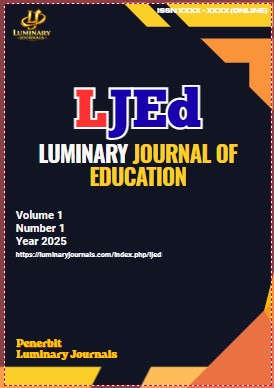
Luminary Journal of Education
Luminary Journal of Education (LJEd) is a peer-reviewed, open-access scholarly journal dedicated to the dissemination of high-quality research and academic discourse across the full spectrum of educational studies. The journal is designed as an inclusive and interdisciplinary forum that accommodates diverse theoretical perspectives, methodological approaches, and educational contexts at local, national, and global levels. The journal welcomes original research articles, conceptual papers, systematic reviews, meta-analyses, case studies, action research reports, and reflective scholarly essays that contribute meaningfully to the advancement of educational knowledge and practice. Luminary Journal of Education emphasizes rigor, originality, ethical research practices, and relevance to contemporary educational challenges. The scope of the journal encompasses all fields and levels of education, ranging from early childhood education to higher education, formal and non-formal learning environments, teacher professional development, educational policy, and lifelong learning. By embracing a broad scope, the journal aims to bridge disciplinary boundaries and encourage integrative perspectives that enrich educational research and practice. By embracing a comprehensive and inclusive scope, Luminary Journal of Education seeks to become a dynamic academic platform that connects scholars, educators, policymakers, and practitioners. The journal is committed to promoting interdisciplinary dialogue, advancing educational innovation, and contributing to sustainable educational development at both national and international levels.
-
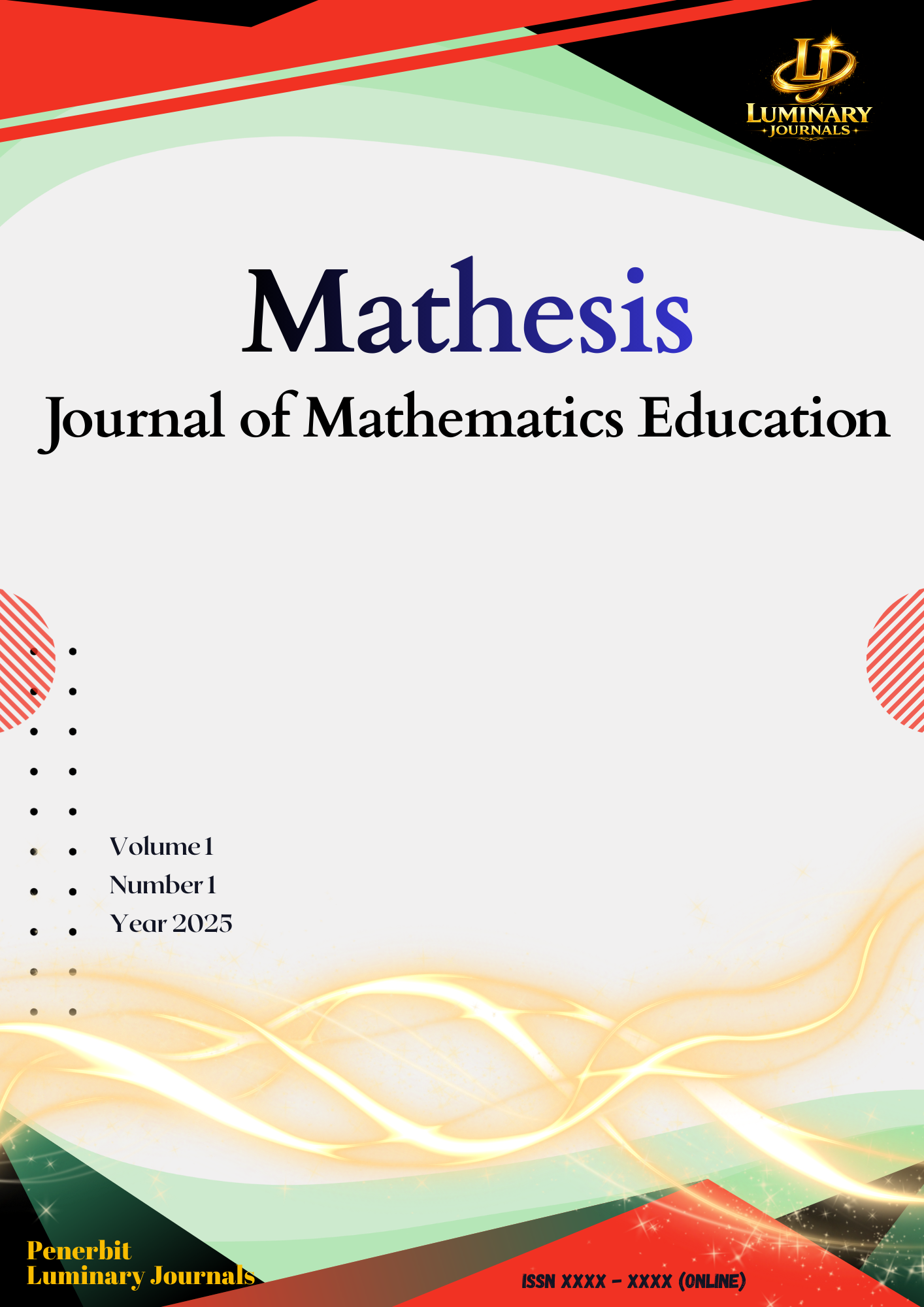
Mathesis : Journal of Mathematics Education
Mathesis: Journal of Mathematics Education is a peer-reviewed, open-access scholarly journal dedicated to advancing research, theory, and practice in mathematics education across diverse educational contexts. The journal serves as a platform for academics, researchers, teachers, curriculum developers, and policymakers committed to improving the quality of mathematics teaching and learning at all educational levels. Mathesis promotes rigorous, innovative, and impactful research that strengthens mathematics education as both a scientific and professional field, welcoming theoretical frameworks, empirical studies, methodological innovations, and transformative classroom practices that address contemporary challenges while bridging theory and real-world implementation. The journal publishes original research articles, literature reviews, meta-analyses, conceptual papers, case studies, action research, and research-based development studies, all subjected to a rigorous double-blind peer-review process to ensure academic integrity and scholarly contribution. Covering mathematics education from early childhood to higher education and teacher professional development, Mathesis embraces interdisciplinary perspectives connected to psychology, sociology, philosophy, technology, and cognitive science, with particular attention to innovative pedagogies such as problem-based learning, inquiry-based learning, realistic mathematics education, ethnomathematics, STEM integration, culturally responsive teaching, assessment and evaluation strategies, and digital transformation—including artificial intelligence, augmented reality, learning analytics, and online learning platforms—while fostering global dialogue and international collaboration in mathematics education research.
-
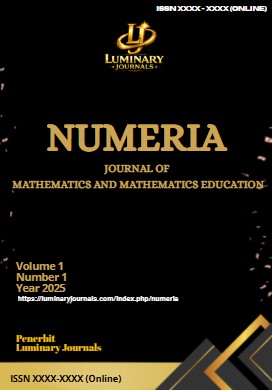
Numeria: Journal of Mathematics and Mathematics Education
Numeria: Journal of Mathematics & Mathematics Education is a peer-reviewed, open-access scholarly journal dedicated to publishing high-quality research and academic discourse in the fields of mathematics and mathematics education. The journal provides a scholarly platform for researchers, mathematicians, educators, curriculum developers, and policymakers to disseminate innovative ideas, empirical findings, and theoretical contributions that advance mathematical knowledge as well as the quality of mathematics teaching and learning at all educational levels. Numeria upholds academic rigor, originality, ethical research standards, and relevance to contemporary scientific and educational challenges in both national and international contexts.
The scope of Numeria covers diverse areas of mathematics education, including mathematics teaching and learning, mathematical thinking and reasoning, problem solving and mathematical literacy, ethnomathematics, STEM and technology in mathematics education, as well as curriculum and assessment in mathematics education. In addition, the journal publishes scholarly works in mathematics, including algebra, calculus, applied mathematics, mathematical modelling, statistics, and data analysis. Numeria welcomes original research articles, literature reviews, conceptual papers, case studies, action research, and research and development studies that bridge theory and practice, foster interdisciplinary collaboration, and support the advancement of mathematics and mathematics education in a rapidly evolving scientific and technological era.
-
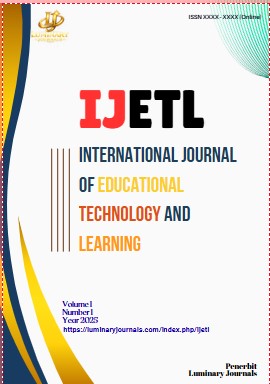
IJETL: International Journal of Educational Technology and Learning
IJETL: International Journal of Educational Technology and Learning is an international peer-reviewed scholarly journal dedicated to publishing high-quality research that advances the integration of technology in teaching and learning across diverse educational settings worldwide. The journal provides a global platform for researchers, educators, instructional designers, and policy-makers to disseminate original research, theoretical perspectives, and innovative practices that enhance learning through digital technologies. IJETL focuses on contemporary issues such as e-learning, online and blended learning, artificial intelligence in education, learning analytics, digital instructional design, and emerging educational technologies that improve learning effectiveness, accessibility, and engagement.
In providing recommendations to the editor, reviewers evaluate manuscripts based on their originality, scholarly contribution, methodological rigor, and relevance to the field of educational technology and learning. The journal prioritizes well-designed quantitative, qualitative, and mixed-methods studies that offer meaningful theoretical and practical implications. Articles based solely on personal reflections or limited observations without strong theoretical and methodological foundations are unlikely to be considered. Through rigorous peer review and international collaboration, IJETL is committed to promoting academic excellence, fostering innovation, and supporting the advancement of technology-enhanced learning globally. The journal is published four times a year, with issues released in March, June, September, and December.